Why core spun yarn still matters when fabric performance is on the line
Core spun yarn sits in a very practical part of textile sourcing. It is not just a yarn name on a spec sheet; it is often the difference between fabric that behaves predictably in production and fabric that keeps causing small headaches on the knitting floor, in weaving, or later in garment finishing. For buyers comparing a core spun yarn manufacturer, a core spun yarn supplier, or a broader textile partner, the real question is usually simple: will this yarn run consistently, look the way the mill expects, and suit the end product without forcing a redesign?
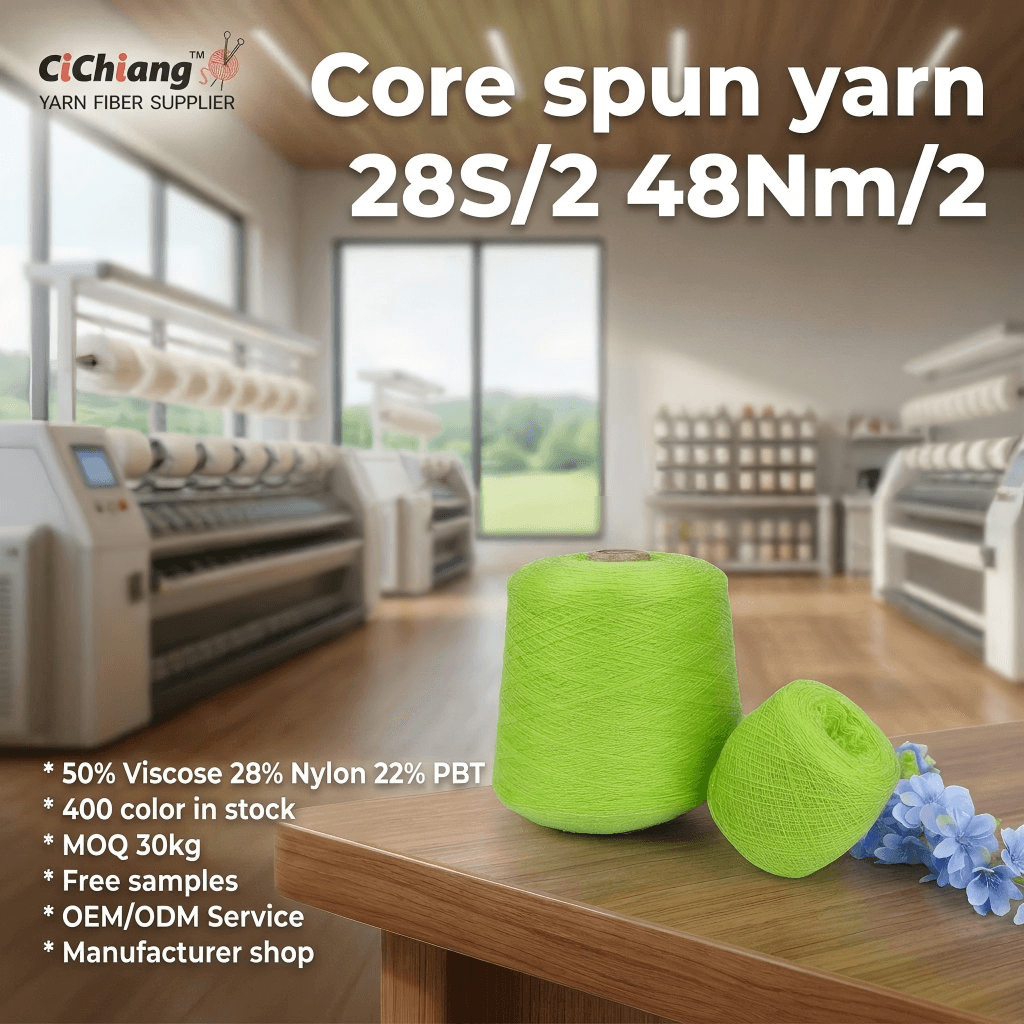
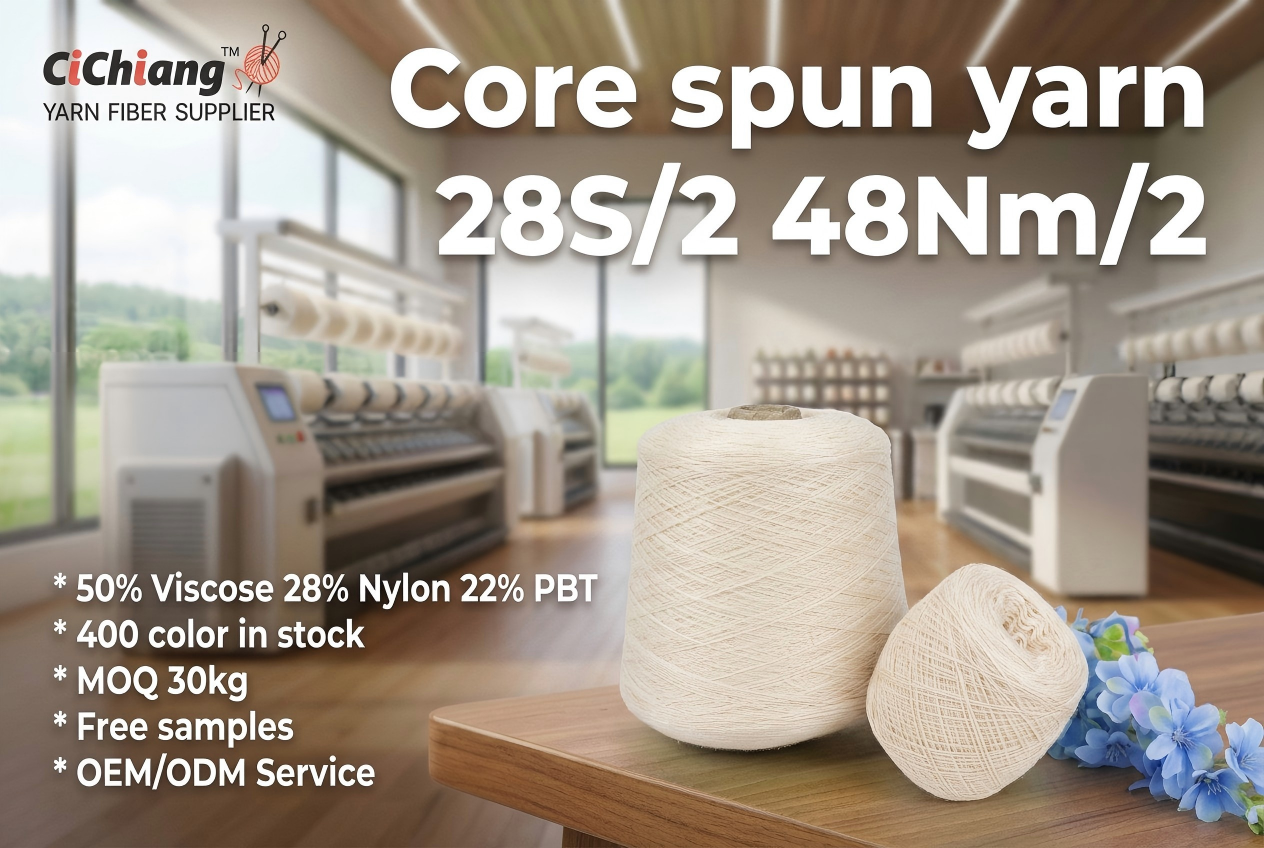
The yarn shown in the supplied information is positioned as a cone-wound industrial supply product for textile manufacturing, with counts listed as 28S/2 and 48Nm/2, plus a blend noted as 50% viscose, 28% nylon, and 22% PBT. That blend suggests a performance-oriented yarn rather than a purely decorative one. Exact core construction is not visible, so it should not be guessed at, but the supply format and the stated OEM/ODM service point to a yarn made for commercial textile development rather than hobby use alone.
What buyers usually need to decide first
Before anyone places a trial order, it helps to separate the sourcing decision into three questions: what is the yarn made from, how is it packaged, and what job must it do in the final fabric?
A core spun yarn for knitting may be chosen for hand feel, recovery, and appearance. A core spun yarn for weaving may be selected more for processing stability and fabric uniformity. Those are not the same brief, and mills know the difference quickly. A yarn that looks attractive on a cone can still behave poorly if twist, count, or fiber blend are off for the intended machine setup.
The supplied notes also mention 400 colors in stock, MOQ 30 kg, free samples, and OEM/ODM service. For sourcing teams, that is the sort of information that affects early-stage development more than marketing copy ever will. A broad stock color range can shorten sampling cycles. A modest MOQ can make pilot runs more realistic. Free samples are useful, although buyers should still confirm whether the sample reflects the same construction and dye lot they intend to order.
Reading the supplied specifications without overthinking them
The 28S/2 and 48Nm/2 markings indicate two ways of describing a plied yarn count. In practice, that means the yarn is being presented in both English and metric systems, which is common in international trade. Still, conversion and interpretation should be verified with the supplier, especially if the yarn will be run on specific knitting or weaving equipment.
The blend of viscose, nylon, and PBT suggests a balance between softness, resilience, and structural stability, but the exact performance profile depends on how those fibers are arranged in the yarn. That is one of those details buyers sometimes assume will be “obvious,” and it rarely is. If a fabric program depends on stretch, recovery, or a particular surface effect, the safest path is to request a sample and a written spec confirmation rather than rely on appearance alone.
When core spun yarn is the right fit
This kind of yarn is often considered for apparel fabrics, knitwear, woven fabrics, trims, and other dyed textile products where consistency matters. It can also suit private-label development where a brand wants controlled color options and repeatable supply. The visible cone packaging is another practical plus for mills, since clean winding helps with feeding and reduces avoidable handling issues.
Ningbo Sinopec Fiber Co., Ltd., founded in 1996, is presented as a nylon fiber manufacturer with 150 employees, including 20 engineers, and a factory covering 50,000 square meters with 20,000 square meters of production space. The company states a daily output of 100-150 tons and a focus on PA6 and PA66 polyamide nylon fibers. That background matters because yarn sourcing is often easier when the supplier understands fiber behavior from the ground up, not just at the final wound-cone stage.
Common mistakes buyers make
One common mistake is treating all core spun yarn as interchangeable because the cone looks neat and the color looks right. It is not interchangeable. The composition, count, twist, and end-use requirements need to line up.
Another mistake is assuming the same yarn will work equally well for knitting and weaving. Sometimes it will; often it will not without adjustment. Mills should also be cautious about ordering based only on color stock. Color availability is useful, but it does not replace testing for runnability and fabric appearance.
Practical questions to ask before ordering
Ask the supplier to confirm the exact fiber blend, the count system used, whether the order is intended for core spun yarn wholesale supply or custom production, and what packaging format will ship. If the project is for a new fabric line, request the sample and match it against the intended machine settings. If the yarn will be used for repeated production, ask about consistency between lots rather than only the first delivery.
Quick buyer checklist
Confirm the intended end use.
Check the count specification in both systems if needed.
Verify whether the sample reflects production yarn.
Ask for color availability and MOQ in writing.
Clarify OEM/ODM scope before development starts.
Where to go next
If you are sourcing core spun yarn for a development program, the fastest path is usually a sample-led conversation. Share the end-use, the required color range, and whether you need core spun yarn for knitting or core spun yarn for weaving. From there, the supplier can confirm whether the stated blend, counts, and cone format fit the job. That saves time, and in textile sourcing, saving time without sacrificing clarity is usually the best kind of win.