Why core spun yarn matters in production planning
When buyers ask for core spun yarn, they are usually trying to solve a familiar problem: they need a yarn that can keep up with production, hold its shape, and still feel comfortable in the finished fabric. That balance is not easy to get from a plain spun construction. In knitted and woven goods, the wrong yarn choice can show up later as weak seams, uneven appearance, poor handling on the machine, or a fabric that simply does not wear the way the buyer expected.
For sourcing managers and product teams, the decision is rarely just about color or price. It is about whether the yarn works for the intended fabric structure, whether the supplier can keep shades consistent, and whether the package form supports stable feeding in production. In practice, a buyer is looking for a material that can move from sample approval to bulk orders without unpleasant surprises.
What the supplied product data tells us
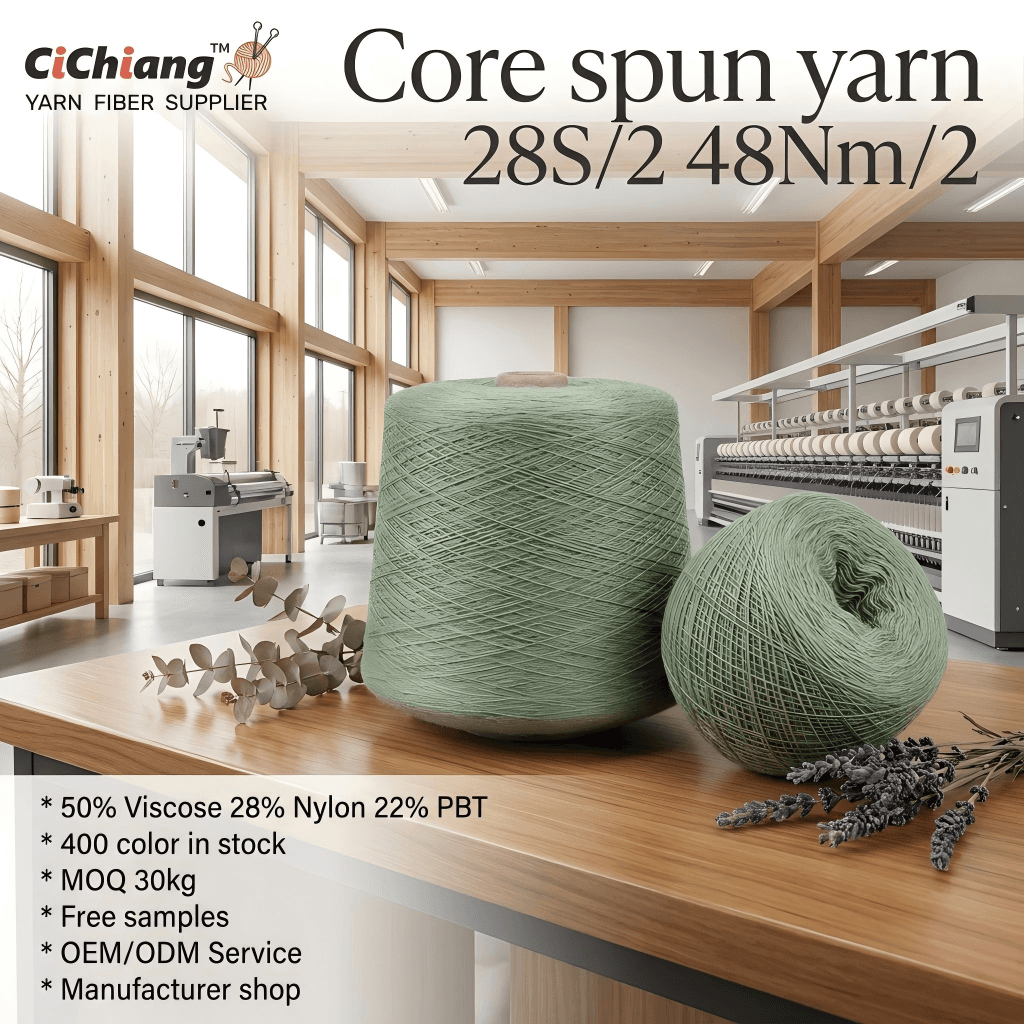
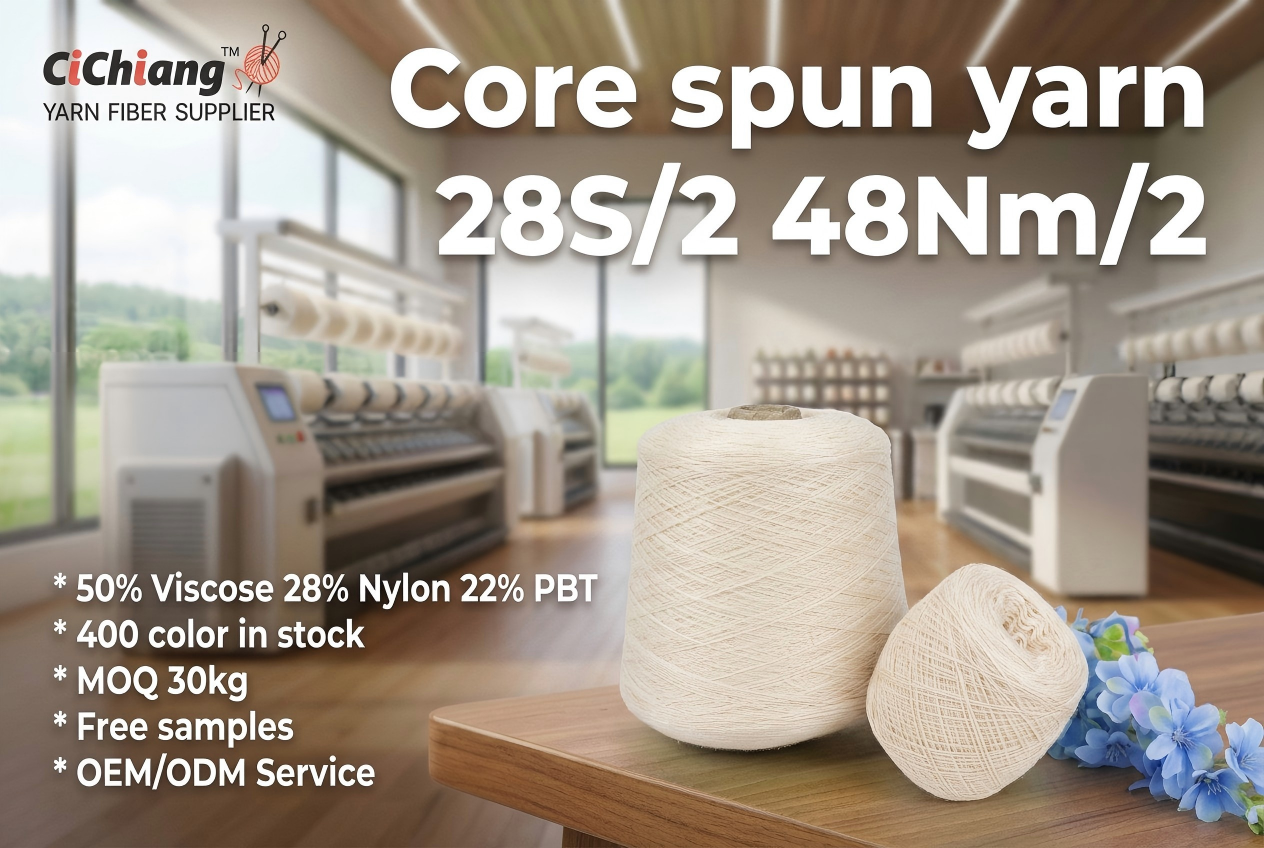
The product information points to a composite textile yarn for knitting or weaving applications, with visible composition listed as 50% viscose, 28% nylon, and 22% PBT. That blend suggests a yarn designed to combine softness, resilience, and a more stable hand feel than a single-fiber yarn might offer. The image also shows fine wound cones and a smaller sample ball, which is typical of yarn prepared for development or factory use.
Two counts are shown in the supplied notes: 28S/2 and 48Nm/2. Those indicate plied yarn counts, though the exact interpretation should be confirmed with the supplier before a purchase order is written. In yarn sourcing, that kind of verification is not paperwork theater; it affects fabric weight, gauge, machine settings, and the final look of the cloth.
Other visible selling points include 400 colors in stock, MOQ 30 kg, free samples, and OEM/ODM service. Those details matter because they tell a buyer that the supplier is likely set up for development work as well as repeat production.
How this type of yarn is used
A core spun yarn supplier is often asked to support apparel mills, knitwear programs, underwear production, socks, and blended textile lines. The appeal is straightforward: the yarn can be engineered for a softer outer surface while still offering structural strength from the composite build. That is one reason buyers look at it for core spun yarn for knitting and core spun yarn for weaving programs alike.
The material can also be used when color variety matters. The supplied image shows a bright lemon-yellow cone and a lime-green cone, and the notes mention an off-white sample as well. That range hints at a supplier comfortable with colored yarn development, which is useful when the garment program calls for seasonal shades or matching a brand palette.
Choosing between yarn options
Buyers often compare this kind of product with polyester core spun yarn or cotton core spun yarn, even when the final blend is different. The real question is not which label sounds more familiar, but which fiber mix gives the best balance for the end use. Cotton-rich options may suit some comfort-focused styles, while synthetic blends can help with durability, shape retention, or machine efficiency. The right answer depends on the fabric construction, not a one-size-fits-all rule.
For a product team, the selection criteria should stay practical: Does the yarn feed cleanly? Does the shade remain stable across lots? Is the hand feel acceptable after finishing and washing? Can the mill run it at the intended gauge without excessive breakage? These are the questions that decide whether a program moves smoothly or turns into a series of small production headaches.
What to verify before placing a bulk order
Check the specification, not just the image
The image and notes show a neat, evenly wound yarn, but photos do not tell the whole story. Confirm the yarn count, ply structure, package form, and exact fiber composition with the seller. If the product is being sourced through a core spun yarn manufacturer, ask for the commercial specification sheet and matching sample references.
Ask for shade control details
With 400 colors in stock, the supplier is clearly emphasizing color variety. That is useful, but it also raises a practical caution: different lots can still vary if shade control is loose. For bulk buying, request a clear approval process for lab dips or bulk shade matching, especially if the yarn will be used in visible fabrics.
Confirm machine compatibility
Not every cone works equally well on every knitting or weaving line. The package may look fine on a table, but feeding behavior is what matters on the machine. Buyers should confirm unwind performance, winding quality, and whether the package suits their own factory setup.
Common sourcing mistakes
One common mistake is treating a blended yarn as if the visible appearance alone defines performance. Another is assuming that a low MOQ means a low-risk decision. A 30 kg minimum is attractive for sampling and early development, but the real test comes when the buyer scales up and needs repeatability.
There is also a temptation to over-specify too early. In textile sourcing, some teams ask for every possible performance promise before they have settled the fabric target. That usually slows development. It is better to lock down the essentials first: composition, count, color, package, and end-use process.
About the supplier background
Ningbo Sinopec Fiber Co., Ltd., founded in 1996, specializes in nylon fiber manufacturing. The company states that it has 150 employees, including 20 engineers, with a factory area of 50,000 square meters and 20,000 square meters of production space. It also reports a daily output of 100-150 tons, primarily producing PA6 and PA66 polyamide nylon fibers.
That background does not tell a buyer everything about the yarn in the photo, but it does suggest a manufacturing base with engineering support and scale. For long-term partnerships, that combination can matter as much as the sample itself.
Practical next step
If you are evaluating core spun yarn wholesale options, start with a sample request and a short technical checklist. Confirm the composition, count, shade target, and package form, then run a small production test under your own machine conditions. That is the quickest way to separate a promising yarn from one that only looks good in a display image.
For projects that need color development, OEM/ODM support, or small-volume trial orders, this type of supplier setup may be a workable starting point. The useful decision is not simply whether the yarn is available, but whether it is stable enough to build a fabric program around.